
这个周末不想呆在家又不想跑太远,那就到Sungai Buloh双溪毛糯来个半日游,不为人知的当地好吃、好玩一一为你介绍!

Fun Things to Do in Ishikawa, Japan, in Winter
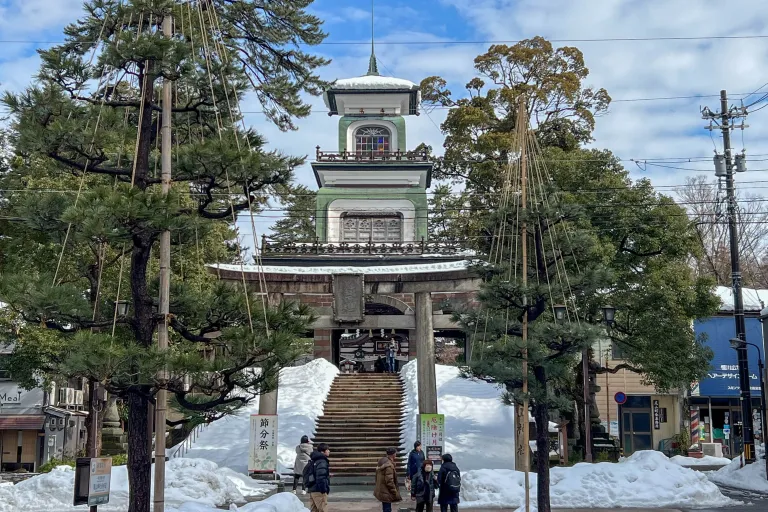
Ishikawa Prefecture, in the area of Japan called Hokuriku, gets a lot of snow in winter, especially in the mountains. But its major cities like Kanazawa, Komatsu, and Kaga also experience major snowfalls, making it a great place to enjoy the treats that winter brings — rich and fatty fish, freshly brewed sake, and snowy rotenburo outdoor baths.
In the Edo period, the Kanazawa Domain, ruled by the Maeda clan, was famous for its prodigious rice production of over one million koku, where one koku was enough rice to feed a man for a year. The wealth that this brought supported a richly artistic culture.
On a three-day trip in January, I travelled to Ishikawa with two Muslim companions after a huge snowfall. I flew into Komatsu airport and took a bus to Kanazawa, while my companions arrived by shinkansen from Tokyo.
Kanazawa
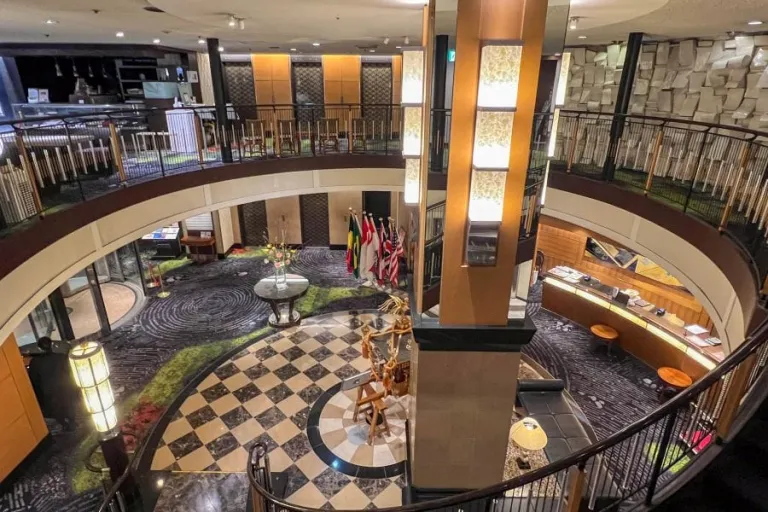
Kanazawa is the prefectural capital of Ishikawa. Consequently, it has a great choice of accommodation. I stayed at the Hotel Kanazawa and the Kanazawa New Grand Hotel — both were excellent. The two-loop bus routes and the local line take you to all of the main sights, and you can pay with cash or a chip-enabled credit card.
Kanazawa Castle and Kenroku-en Garden
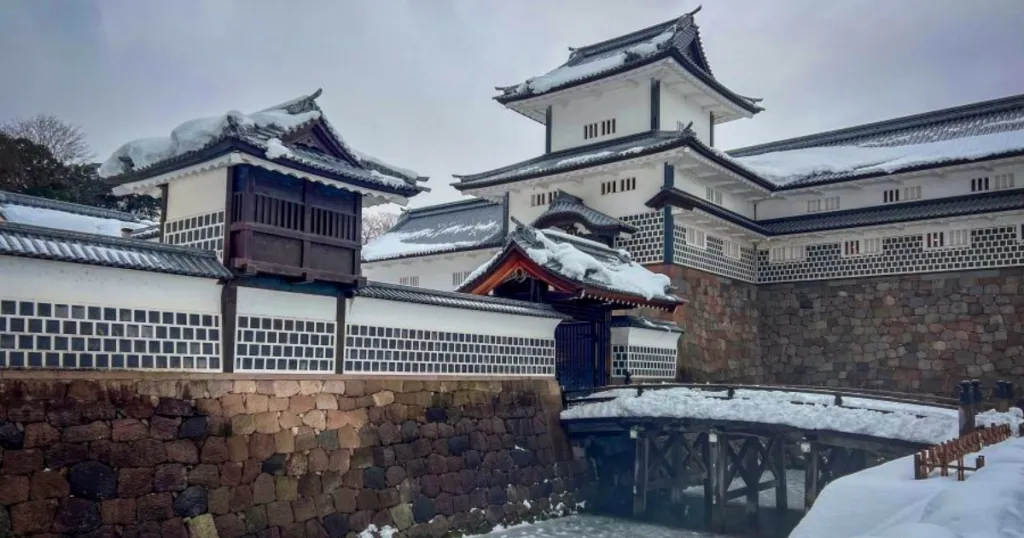
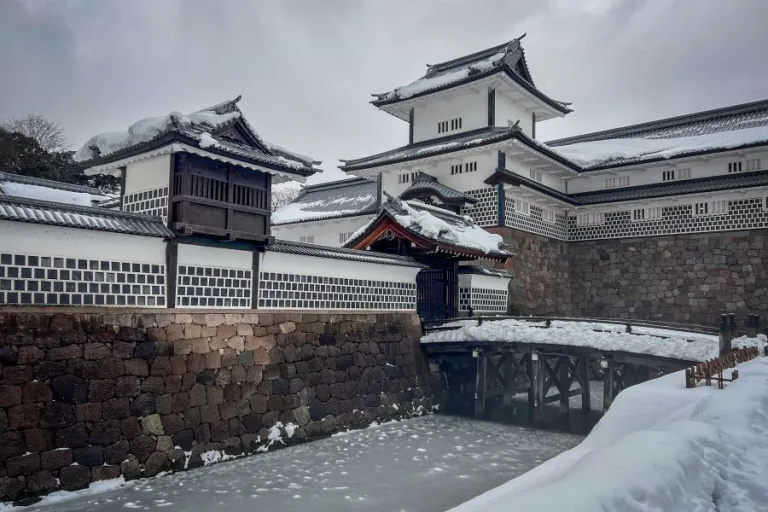
Kanazawa Castle occupies a large plateau in the middle of the city. It has no keep, but its gates are impressive, as are its extensive stone walls employing several construction styles reflecting different historical periods. The tile roofs are exquisitely beautiful with a thick layer of snow.
Across an elegant bridge from the castle lies Kenroku-en Garden, once the playground of successive generations of Maeda lords. The huge garden features large ponds and meandering streams, overlooked by elegant teahouses.
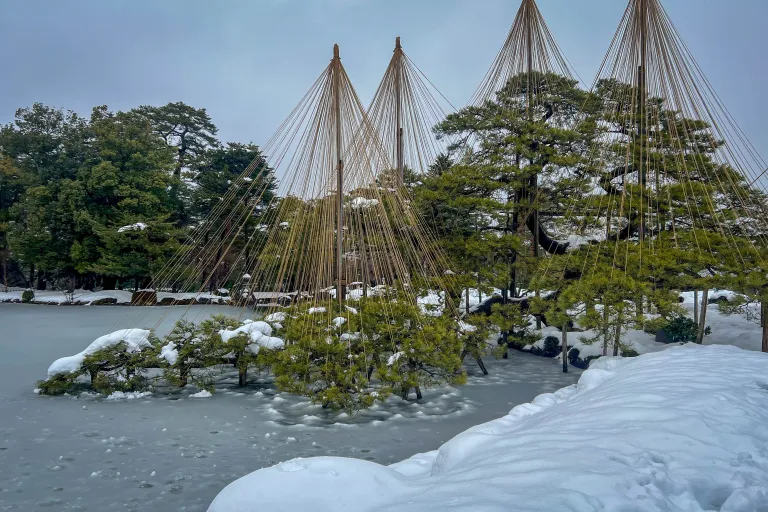
When we visited, snowfall had transformed the garden into a monochrome landscape. In winter, the trees are protected with yukitsuri, a tepee-like structure of a central pole with straw ropes that supports branches against heavy snow. It’s become a distinctive visual feature of Kenroku-en and an icon of Kanazawa. Here and there you can find little snowmen with stick arms, with people rolling in the snow beside them, taking selfies. In local souvenir shops, you can even buy a little press for forming cute snow ducks to place in photogenic spots.
21st Century Museum of Contemporary Art
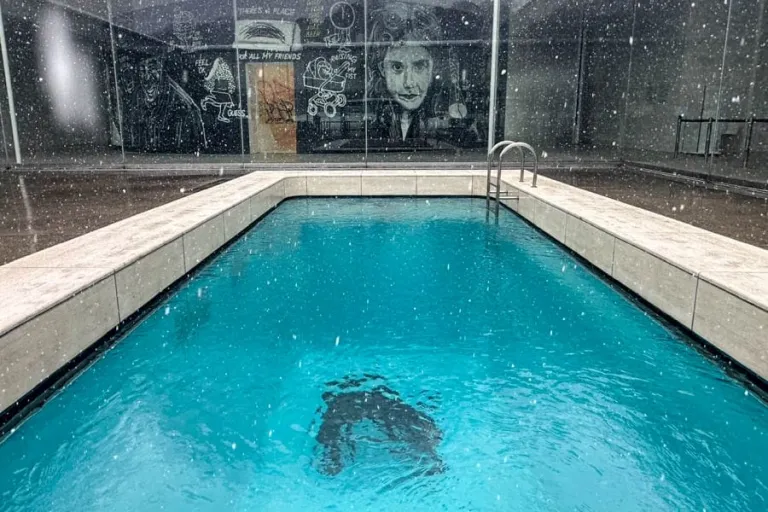
Leandro ERLICH, "The Swimming Pool", 2004
Courtesy: 21st Century Museum of Contemporary Art, Kanazawa
A short walk from Kenroku-en is the 21st Century Museum of Contemporary Art. It was established to integrate contemporary culture into a city renowned for its historical heritage.
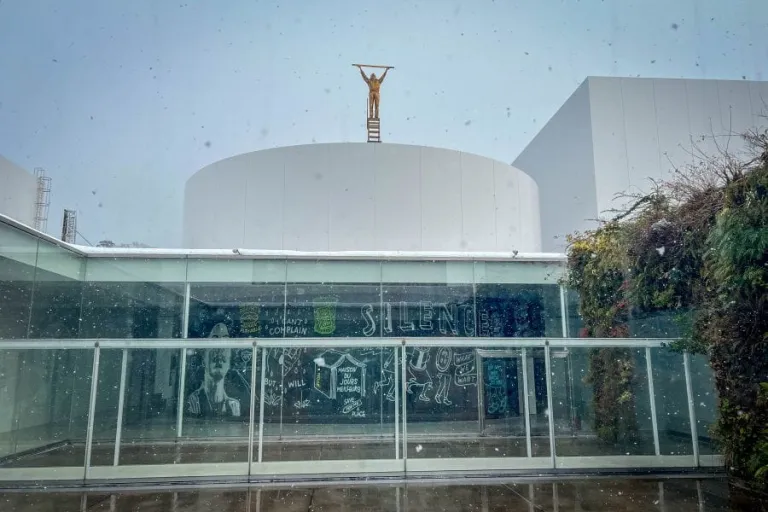
Jan FABRE, "The Man Who Measures the Clouds", 1998
© Angelos bvba
Courtesy: 21st Century Museum of Contemporary Art, Kanazawa
Its best-known work is an illusional swimming pool with a thin layer of water sandwiched in Perspex. You can go through a tunnel to enter it from underneath while your friends take impossible photos from above. Besides this and other fascinating permanent exhibits, there are frequent temporary exhibitions. When we visited, we enjoyed watching two local boys having a snowball fight, reflected in the museum’s long glass wall.
Omi-cho Market
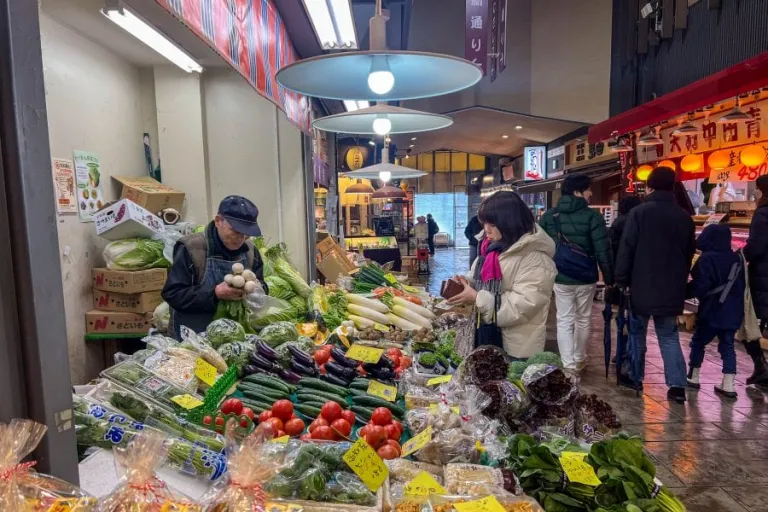
Omi-cho Market, in operation since 1721, is a compact network of covered streets lined with small, family-run businesses, some of which have operated for several generations. Many vendors specialise in specific products, such as crab, shrimp, dried fish, or regional vegetables. Besides raw ingredients, the market includes prepared foods and simple dining spaces where dishes reflect the season and the day’s catch. There are also well-appointed shops selling a wide range of sake and an attractive variety of goods.
Most vendors and shops operate between 09:00 and 17:00, and the traditional stalls begin closing up in the mid- to late afternoon.
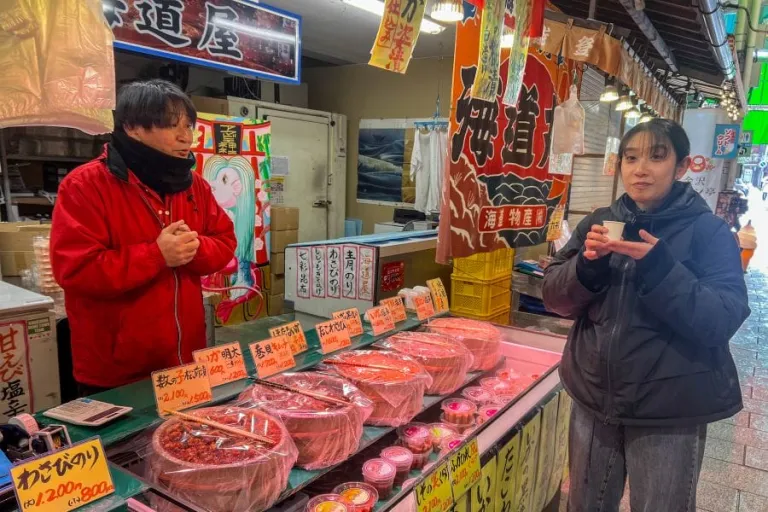
The shopkeepers are friendly and keen to talk. We were offered free samples of tasty salted shrimp and squid and the stall owner gave me advice about which sake to buy. If you sit down at one of the restaurants, you may find yourself making friends with the other customers.
Coil
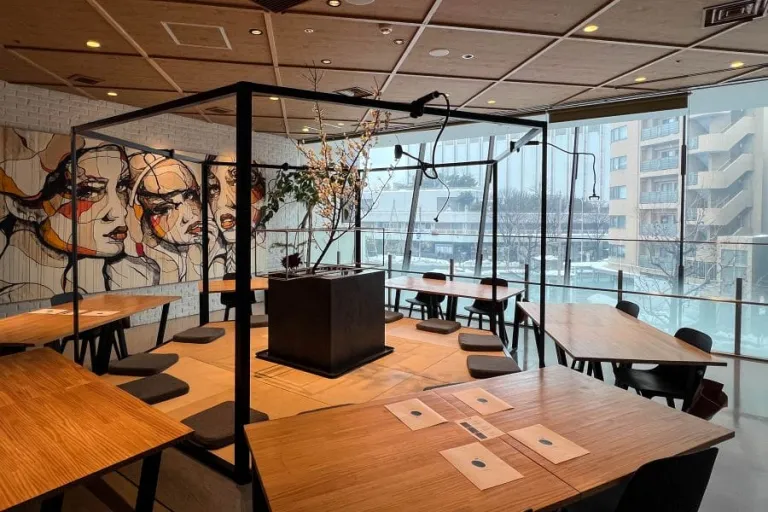
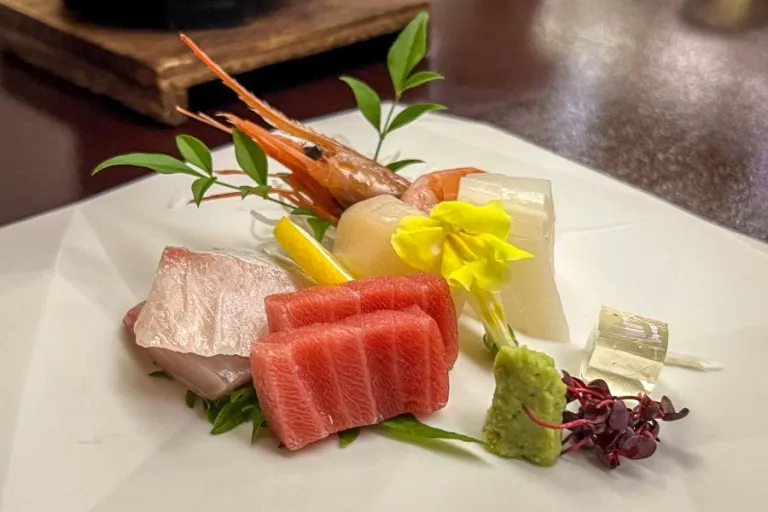
While there are plenty of places to eat lunch in Omi-cho Market, another good option is Coil in the nearby ‘fashion building’, Hakomachi. This recently refurbished restaurant and tea house offers a unique dining experience where you make your own sushi. We sat in the Japanese/Western fusion space with big window views of snowy Kanazawa outside. The menu offers a huge array of toppings, from standards like squid and salmon to non-traditional but nevertheless delicious avocado and tuna prosciutto. There are vegan options too.
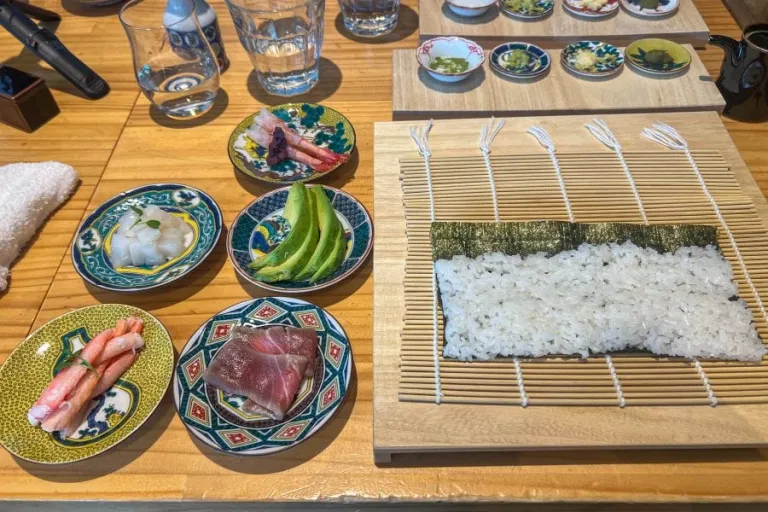
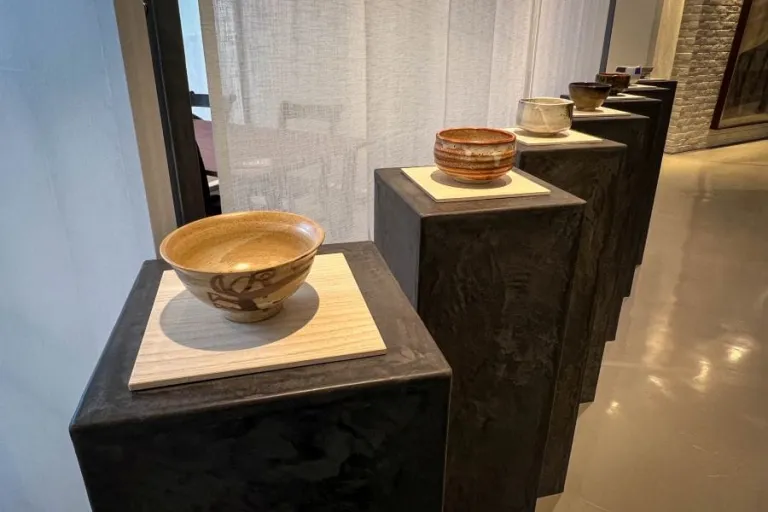
The staff bring your order to the table in a large wooden box. Lift up the sliding door, and inside are the toppings, the makings of two types of sushi, and freshly cooked tempura. After enjoying the hot tempura, we set to work making thin roll sushi and gunkan-maki. If you’re careful not to overdo the toppings, it’s easy to make attractive sushi. There’s also a fine selection of local sake which combines beautifully with the meal. After the sushi, you can try making and drinking matcha green tea. Coil has an amazing collection of tea bowls to choose from. I was surprised to learn that tea bowls have seasonal variants.
Higashi Chaya
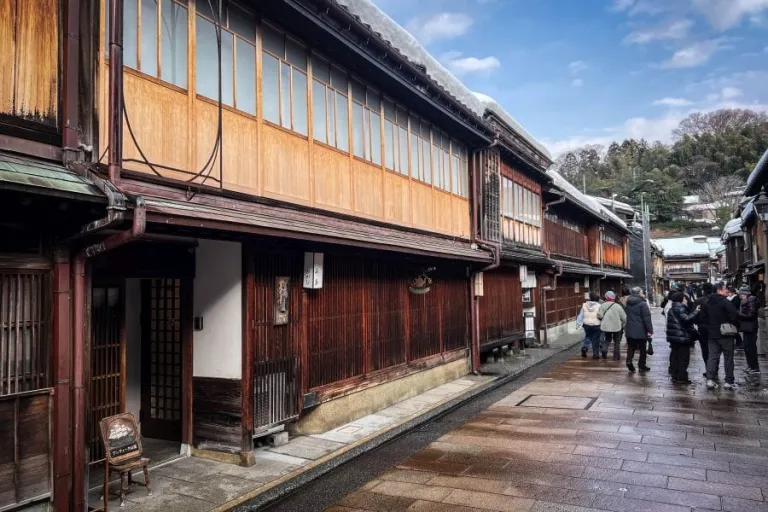
Kanazawa has three chaya districts — areas where geisha offered entertainment in the Edo period. Higashi Chaya is the largest, and it still retains the atmosphere of Old Japan. We visited the Shima Geisha House, a museum that preserves the interior of a typical geisha teahouse with many examples of the finely crafted items of the trade.
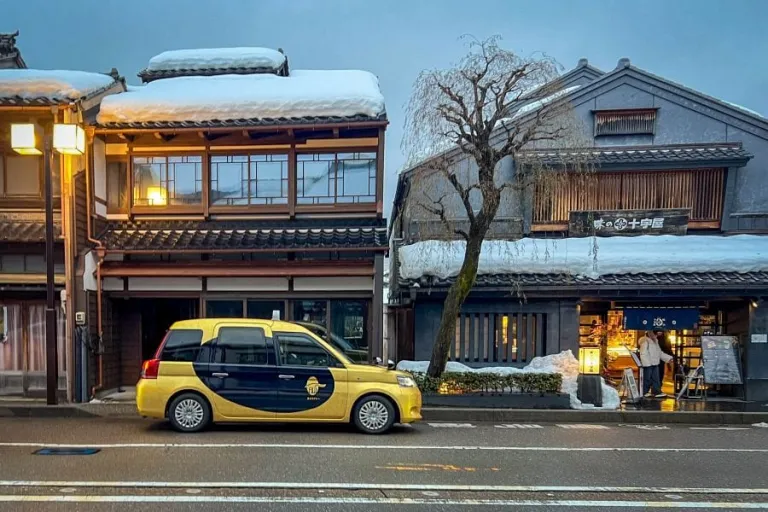
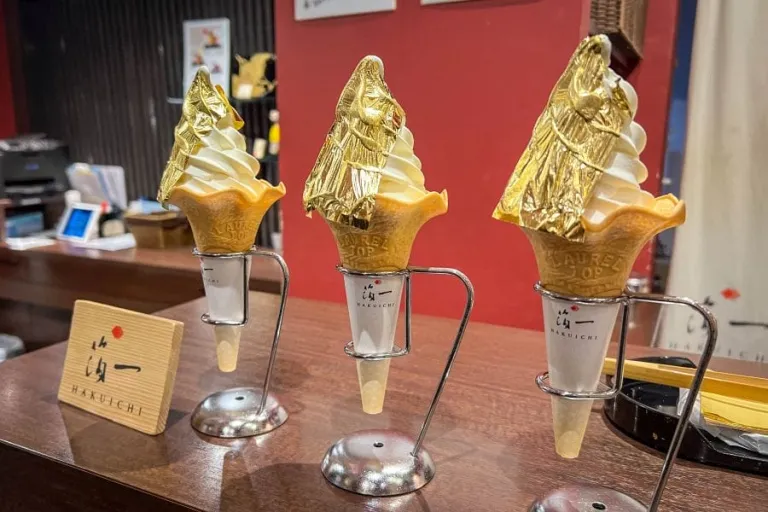
Navigating through the ranks of people photographing themselves in the street, we made our way to the Hakuichi Higashiyama shop, home of gold leaf ice cream. Gold leaf is a signature craft of Kanazawa, and shops in the district sell gold-encrusted lacquer and glassware, gold-leaf cosmetics, and the famous soft serve. Spoiler: Gold doesn’t actually taste of anything. But the rich milky ice cream is delicious, and gold leaf stuck to your lips makes a fun Instagram moment.
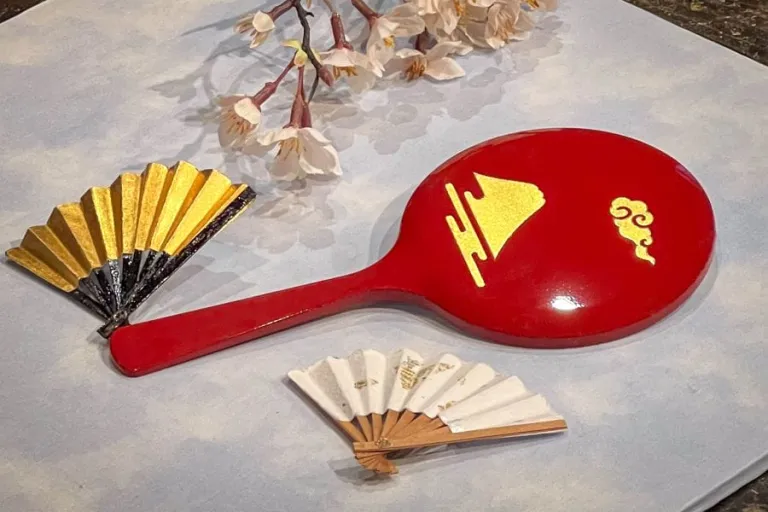
Hakuichi also offers gold leaf workshops where a charming lady leads you through the intricacies of applying gold to a choice of objects of more or less practical use. I’m now delighted to own a lacquer-looking mirror with a gold Fujisan and cloud on the back.
Kaga
After our two-night stay in Kanazawa, we hired a van to take us south to Yamanaka Onsen in the mountains of Kaga. Our excitement mounted as we headed towards the snowy peaks of the mountain range.
Yamanaka Onsen
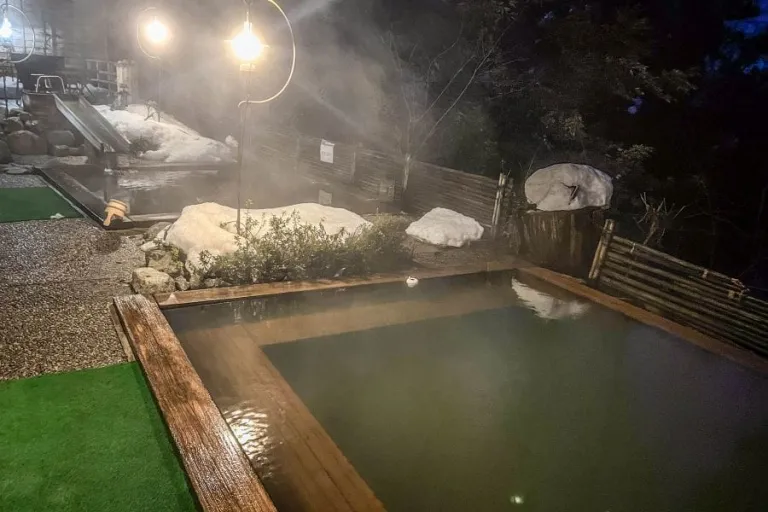
“Yamanaka” means “in the mountains,” which aptly describes this pretty hot spring town. It has public baths in the centre of town, and in ryokan dotted throughout the valley. We stayed at Hanatsubaki, a large ryokan-hotel with open-air hot spring baths located deep in a gorge. The open-air baths are for both men and women, so for modesty’s sake, you can borrow some shorts and a top from the lobby. You take a lift down one level and then descend some steep stone steps to arrive at the baths located right by a river. It’s an amazing feeling to lounge in hot water with snow all around.
Komatsu
From Kaga, we drove back north into Komatsu, visiting its rural and urban attractions.
Nata-dera Temple
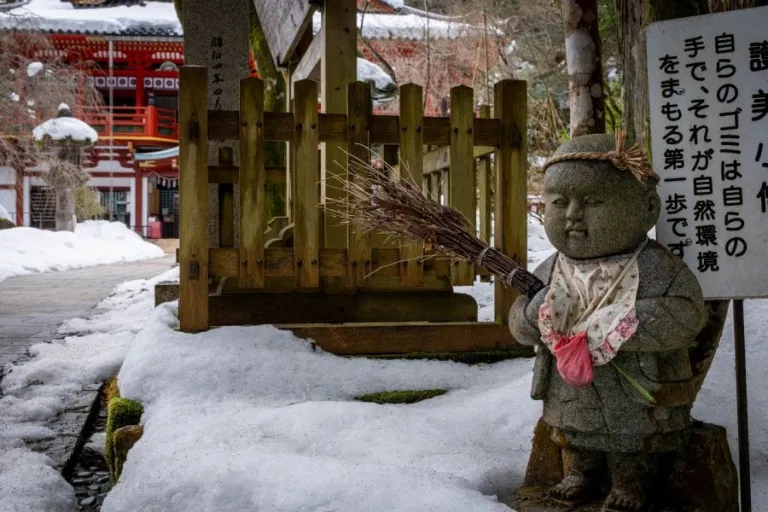
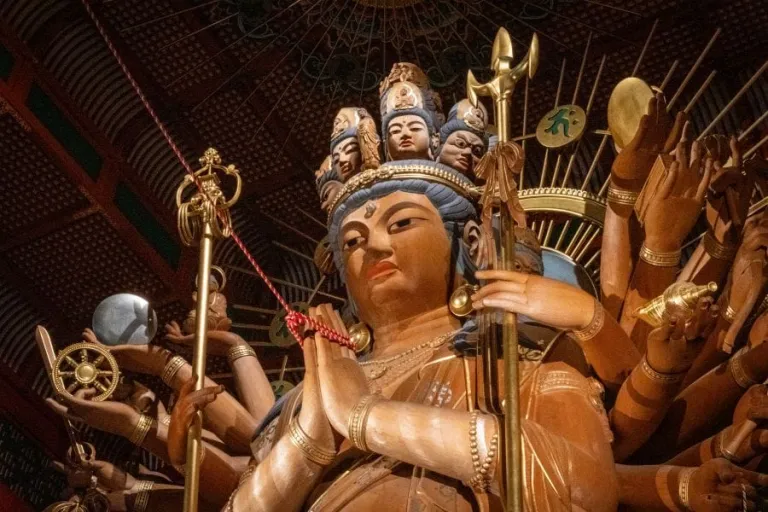
Nata-dera is a short drive from Hanatsubaki. The temple dates from 717, when a mountain ascetic was fascinated by the rock formations there and experienced a vision of Kannon, the deity of compassion. Nata-dera, with its impossibly tall trees, is particularly lovely in the snow.
Yunokuni no mori
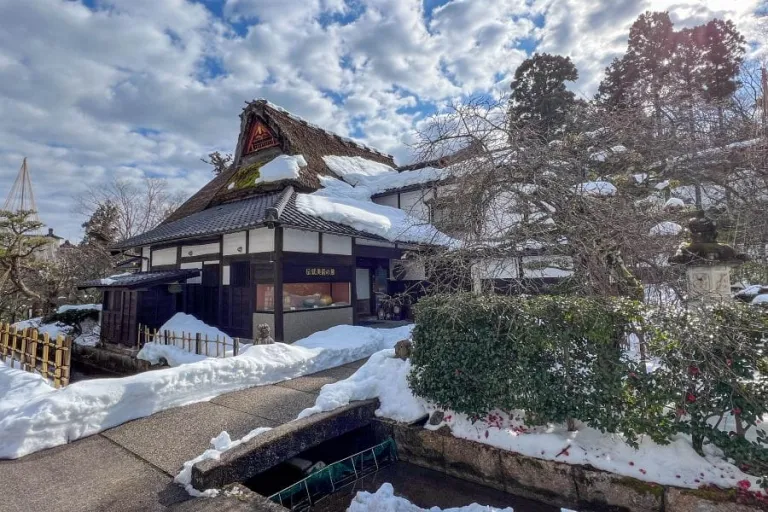
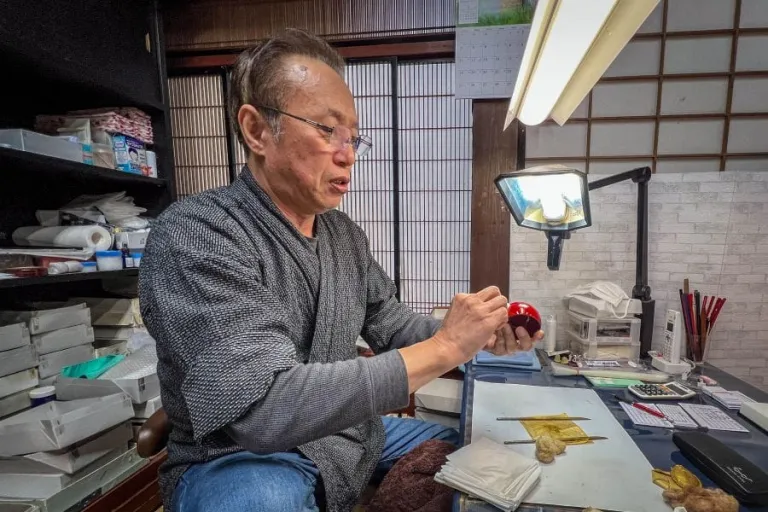
Close by Nata-dera is Yunokuni no mori, a collection of traditional farmhouses brought together from all over Ishikawa and reconstructed. These highly evocative buildings house shops, restaurants, and craft workshops. We exercised our creativity again, having a go at applying gold powder to a picture we scratched into a lacquerware drinking vessel, a technique called chinkin. We also painted designs on ceramic cups in the Kutani-yaki style. Interestingly, the colours of some of the pigments change dramatically after firing.
Hokkoku Torimachi
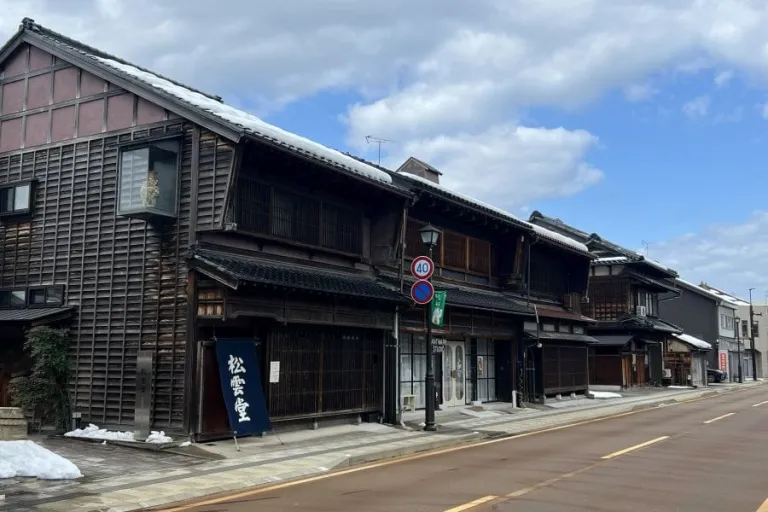
Hokkoku Torimachi in Komatsu is a historic shopping street that developed along part of the old Hokkoku Kaido, a major highway of the Edo period linking the Hokuriku region to central Japan. The street formed part of a network of post towns and merchant districts along this important corridor. Komatsu Castle stood nearby, and the surrounding town developed to support both the castle and the flow of trade.
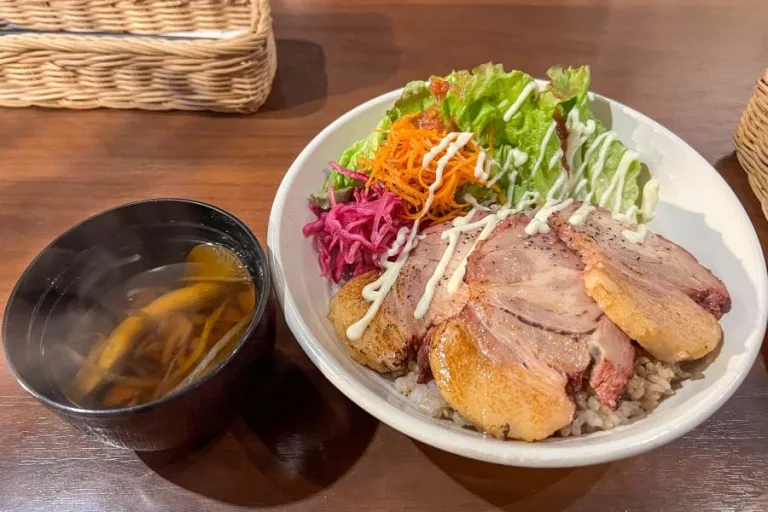
Today, the area is being actively developed by local residents and shopkeepers. One such development is Café Machiya Bunko, a bookshop converted into a delightful eatery. The interior décor is eclectic, creating a very snug atmosphere. We enjoyed browsing the wide selection of books as we waited for our lunch to be served. I selected the pork and ginger over rice while my companions ordered the mixed plate of fried chicken and various salads.
Aeon Mall
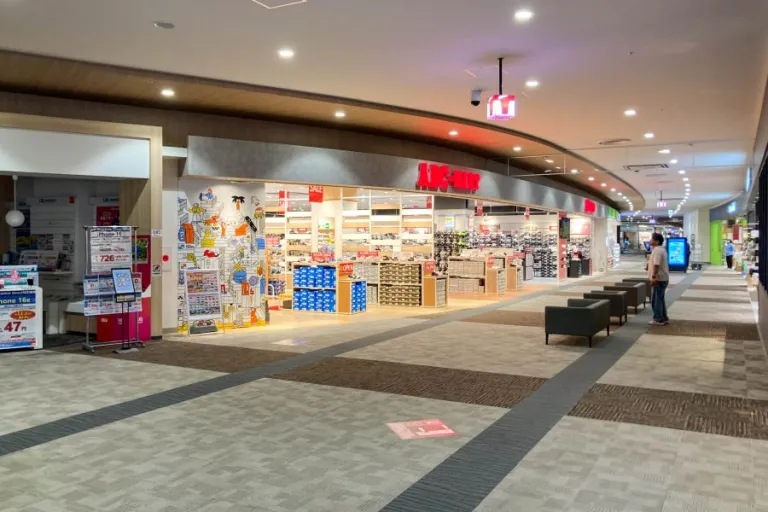
Credit: Aeon Mall
Close to Komatsu Airport is a giant shopping mall run by the popular Aeon supermarket chain. It’s home to most of Japan’s popular mid-market brands, as well as many niche stores. It’s a convenient spot for some last-minute shopping before boarding your plane.
All images credited to Rod Walters, unless otherwise stated.
Published on
About Author
TripZilla Malaysia
Author at TripZilla
RECOMMENDED READS
让你意想不到的Sungai Buloh!双溪毛糯半日游记 罗马 五大景点一日游,用走的就可以逛完 【罗马】虽然大,但主要的五大景点(包括斗兽场)只要用步行就能走到了哦!重点是,作者拍得照片很赞!XD
【 合艾 旅游】泰国HATYAI两天一夜自由行旅游攻略:交通 – 住宿 – 美食 – 景点 合艾的两天一夜游,花费仅约RM200!怎样才能在泰国玩得实惠又开心?一起来看看这篇游记吧。
10 Best Instagram Spots in Macao Malaysians Must Check-Off Macao, where your ‘gram dreams really do come true.
台湾旅游必备宝典!7个Tips让你避开地雷,省钱省时绝对不吃亏! 大家都知道台湾是个非常Travel Friendly 的国家,但有哪些超好用的Tips,哪些要避开的地雷你真的知道吗?小编整理了7个Tips,让你避免吃亏踩坑,快乐游台湾!
RECENT ARTICLES
8个理由告诉你:秋冬季节到瑞士旅行,为什么值得玩得更久? 从巧克力、芝士到滑雪山坡,让你的瑞士旅行体验更上一层楼。
Mandarin Oriental Desaru Coast: Inside Johor’s Luxury Rainforest Resort Welcoming Johor's latest luxury retreat: Mandarin Oriental, Desaru Coast.
Super Nintendo World Singapore Is Coming: What Malaysian Need to Know Good news, Mario fans ~
布城半日游怎么玩?从粉红清真寺到水上Taxi 7个打卡景点,这份游路线值得收藏! 从梦幻的粉红穹顶、充满异域美感的摩洛哥风情!
What Makes China eSIM Ideal for Uninterrupted Internet Connectivity Here's why travelling in China is better with an eSIM