众所周知,中国是一个幅员辽阔的国家,拥有着壮丽迷人的自然景观,丰富厚重的文化积淀,还有数十亿勤劳聪慧的“龙的传人”。对于远道而来的外国游客们来说,中国确实让人惊叹不已。除了美景美食之外,在旅程中你还会慢慢觉察到中国人与众不同的生活方式。以下就把我眼中独特的中国特色分享给大家。

Did You Know You Could Slap Statutes? These “Traitor” Statues in Hangzhou
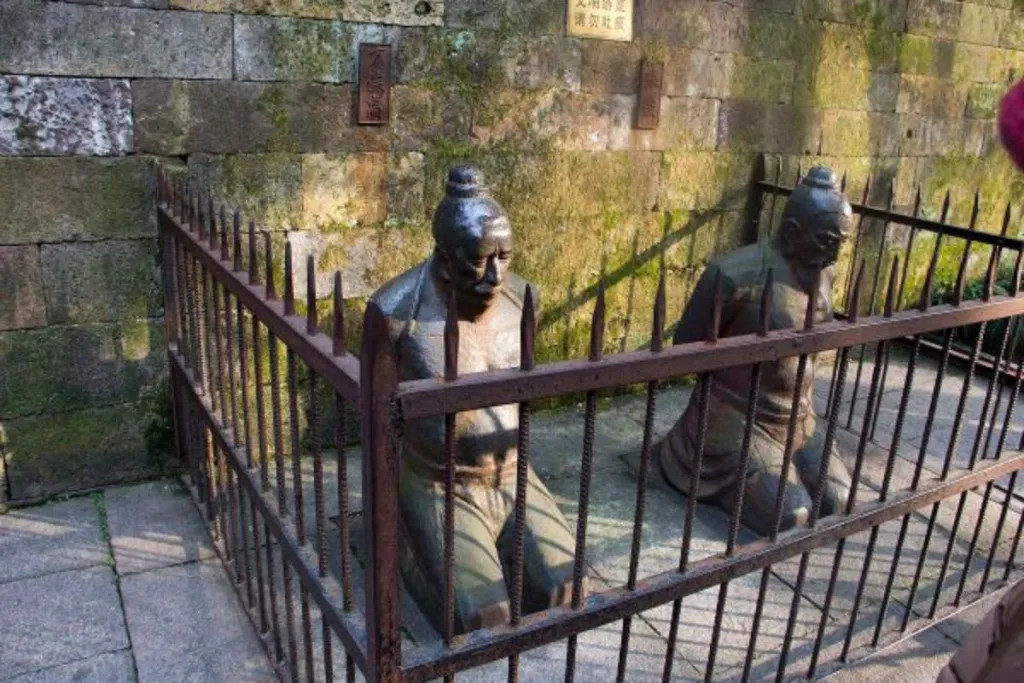
When travellers think of Hangzhou, they picture misty mornings over West Lake, willow-lined causeways, and poetic scenery that inspired emperors and scholars. But just a short walk from the lake’s quieter northern edge lies one of China’s most unusual historical attractions — a pair of iron statues that generations of visitors have slapped, spat on, and cursed.
These are the kneeling statues of Qin Hui and his wife, figures remembered in Chinese history as symbols of betrayal. Unlike most monuments around the world, these statues were never meant to honour. They were built to shame.
And that’s exactly what they still do.
The historical drama behind the statues
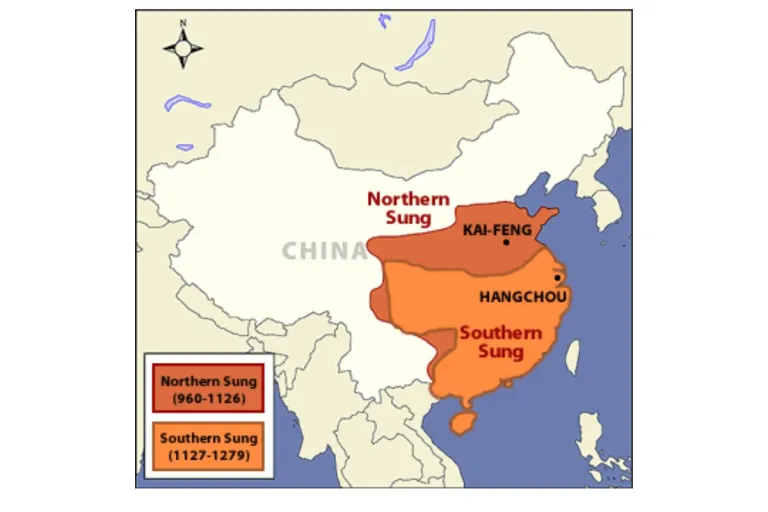
To understand why these statues exist, you need to go back to the 12th century.
During the Southern Song dynasty, China was politically fractured. The northern territories had fallen to the Jurchen-led Jin dynasty, and the Song court had retreated south. Amid this crisis rose one of China’s most revered military heroes: Yue Fei.
Yue Fei became famous for his military campaigns against the Jin forces. His victories gave hope to a court in exile and to citizens longing to reclaim lost territory. Over time, he came to embody loyalty, patriotism, and moral integrity.
But politics at court told a different story.
Qin Hui, a powerful chief councillor under Emperor Gaozong, advocated for a negotiated peace with the Jin rather than continued warfare. In the traditional narrative passed down for centuries, Qin Hui orchestrated Yue Fei’s recall from the battlefield and framed him on false charges of treason.
In 1142, Yue Fei was executed in prison.
Peace was signed soon after through the Treaty of Shaoxing, formalising the division between north and south. While Qin Hui retained power during his lifetime, history judged him harshly. Yue Fei was later rehabilitated and elevated to near-mythical patriotic status. Qin Hui’s name, meanwhile, became synonymous with treachery.
A monument designed to condemn
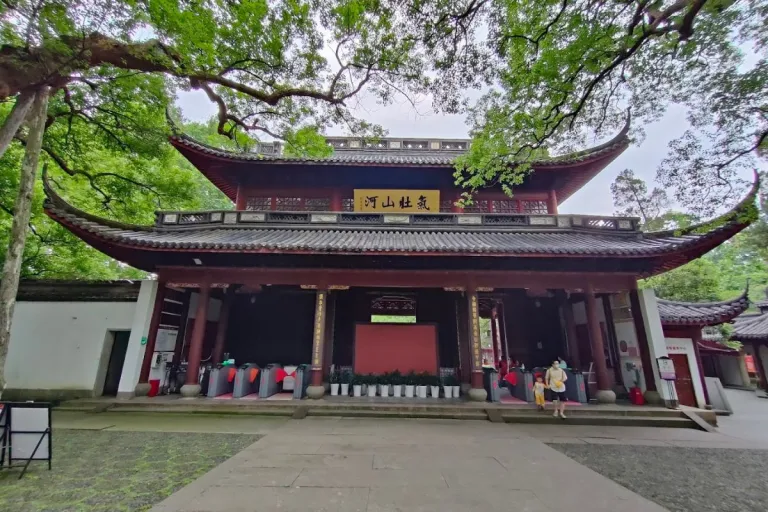
Fast forward to the Ming dynasty. Officials in Zhejiang commissioned a memorial complex around Yue Fei’s tomb near West Lake. This became what we now know as the Yue Fei Temple (also called Yuewang Temple).
Here’s where things get unusual.
Rather than simply honouring Yue Fei, the site also included iron statues of Qin Hui, his wife Lady Wang, and other alleged accomplices. The statues were deliberately crafted in humiliating poses:
Kneeling on the ground
Hands bound behind their backs
Ropes around their necks
Heads bowed toward Yue Fei’s tomb
They were originally placed fully exposed in front of the tomb — a permanent display of disgrace.
Unlike statues meant for reverence, these were built as tools of public condemnation. Visitors were expected to see them not as historical curiosities, but as villains deserving scorn.
Yes, people still slap them
For centuries, the public responded exactly as intended.
Records and modern reports indicate that visitors spat on, kicked, cursed, and struck the statues so frequently that they had to be recast multiple times due to damage. Some accounts suggest at least ten replacements over the centuries.
Today, the statues are fenced off to prevent excessive vandalism. But the symbolic ritual remains. Visitors still pose as if slapping them. Some tap the fence in mock blows. Parents bring children to hear the story of loyalty and betrayal.
For many Chinese visitors, the site is not just historical — it’s moral education.
Even food is part of the legend
The story extends beyond the temple grounds.
A popular Chinese breakfast snack, youtiao (fried dough sticks), is widely linked in folklore to Qin Hui and his wife. According to tradition, the two sticks twisted together represent the couple, fried in oil as symbolic punishment for their betrayal.
While historians debate whether this origin story is factual, the association shows how deeply embedded the tale of Yue Fei and Qin Hui is in everyday culture.
What modern travellers can expect
Today, the Yue Fei Temple complex is a well-maintained historical site featuring landscaped gardens, stone carvings, calligraphy panels, and reconstructed halls detailing Yue Fei’s life and military campaigns.
Travellers often highlight several key experiences:
1. A quieter alternative to busy West Lake spots
While West Lake itself can get crowded, the temple grounds are generally calmer, making it a peaceful cultural stop.
2. Strong storytelling appeal
The story of a loyal general betrayed by political intrigue is dramatic and accessible, even for visitors unfamiliar with Song dynasty history.
3. A striking visual contrast
Yue Fei’s dignified tomb and commemorative inscriptions stand in stark contrast to the bound, kneeling statues opposite — a powerful visual narrative of honour versus shame.
However, some travellers note that English explanations are limited. Non-Chinese speakers may benefit from reading about the history beforehand or visiting with a guide.
Plan to spend around 45 minutes to an hour here if you’re including it in a broader West Lake itinerary.
Are there similar statues elsewhere?
Hangzhou’s statues are the most famous, but not the only ones. Several other sites associated with Yue Fei in different provinces have similar kneeling figures of Qin Hui and Lady Wang.
What makes them remarkable isn’t just their existence, but their purpose. Unlike controversial statues in other countries that spark debate over removal, these were created from the outset as condemnatory monuments.
How does this compare globally?
Around the world, statues of controversial figures often become flashpoints.
In Belgium, monuments of King Leopold II have faced vandalism due to his brutal rule over the Congo Free State. In Spain, statues of Francisco Franco have been removed following years of political debate. In South Africa, the statue of Cecil Rhodes was taken down during the “Rhodes Must Fall” movement. In the UK, protesters toppled a statue of Edward Colston into Bristol Harbour.
In many of these cases, societies debate whether controversial monuments should remain standing.
China’s approach with Qin Hui is different. Rather than removing him from public memory, history reshaped him into a permanent warning.
Why this site stands out
What makes the Qin Hui statues so compelling is the inversion of what monuments typically represent.
Statues usually glorify power and prestige. Here, they strip it away. The medium of bronze and iron — normally reserved for heroes — is used to preserve disgrace.
For travellers, especially those from Southeast Asia where debates over historical memory also surface from time to time, the site offers a fascinating case study in how collective memory is shaped. It’s not just about scenic beauty or ancient architecture. It’s about how societies decide who to honour — and who to condemn.
Walking past Yue Fei’s restored tomb and facing the kneeling figures opposite, you can feel the emotional weight embedded in the landscape. Eight centuries later, the story still provokes reaction.
And perhaps that’s the real reason people still line up to slap the statues.
They aren’t just touching metal.
They’re participating in history.
Published on
About Author
RECOMMENDED READS
一个外国人眼中的中国特色 【印尼•棉蘭】5D4N 玩轉Medan行程花費 大家都在问,棉蘭有什麼好玩?世界上最大的火山湖Lake Toba 还有亞洲最活躍火山之Sibayak都在那里!
10 Best Instagram Spots in Macao Malaysians Must Check-Off Macao, where your ‘gram dreams really do come true.
10个适合穷学生便宜又好吃的悉尼餐厅 住宿费高,交通费高,伙食费也高。生活在悉尼的学生们,即使一个星期打工20个小时,也最多只能补贴一半的生活费。想吃一顿好吃的却又担心钱包越来越薄,只好每天往Maccas(麦当劳)跑。是不是说中了你的心声呢?别担心,今天就让小编为你提供10个经济实惠的餐厅,从今以后让你和Maccas说拜拜!
探索 斯洛文尼亚 :感受世界上唯一以爱命名的国家 无论你是喜欢感受当地文化,还是探索大自然的奥妙,处处风景如画的斯洛文尼亚都能满足你的愿望。在斯洛文尼亚,无论何时何地都能让你拥有精彩丰富的旅游体验,只要用心感受,你一定能这趟旅行中探索属于你的斯洛文尼亚特色。
RECENT ARTICLES
8个理由告诉你:秋冬季节到瑞士旅行,为什么值得玩得更久? 从巧克力、芝士到滑雪山坡,让你的瑞士旅行体验更上一层楼。
Mandarin Oriental Desaru Coast: Inside Johor’s Luxury Rainforest Resort Welcoming Johor's latest luxury retreat: Mandarin Oriental, Desaru Coast.
Super Nintendo World Singapore Is Coming: What Malaysian Need to Know Good news, Mario fans ~
布城半日游怎么玩?从粉红清真寺到水上Taxi 7个打卡景点,这份游路线值得收藏! 从梦幻的粉红穹顶、充满异域美感的摩洛哥风情!
What Makes China eSIM Ideal for Uninterrupted Internet Connectivity Here's why travelling in China is better with an eSIM