
Macao, where your ‘gram dreams really do come true.

8 Iconic Places You Must Visit in Penang
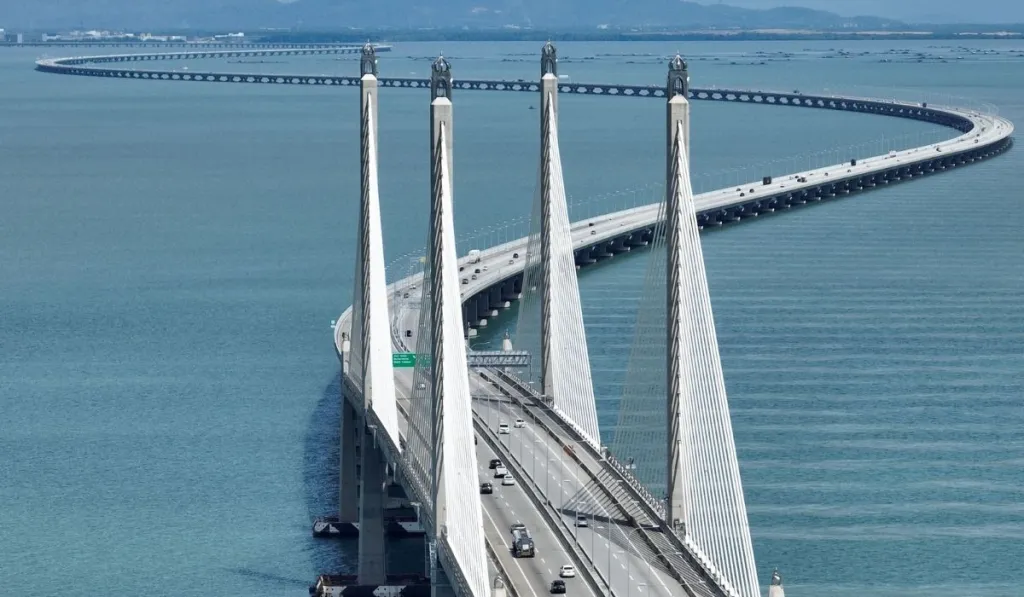
Penang, often referred to as the Pearl of the Orient, is a destination that rewards curiosity and patience. It is an island where layers of history, culture and everyday life coexist in close quarters. The aroma of wok-fired char kway teow drifts through narrow streets lined with colonial shophouses, while temples, mosques and churches stand within walking distance of one another. Penang is not a place where you simply tick off attractions. It is a place you absorb slowly, through wandering, eating and observing.
While a complete exploration of Penang could easily take weeks, certain locations define the island’s identity. These eight iconic places form the foundation of any meaningful first visit, offering insight into Penang’s heritage, landscapes and way of life.
1. The Living Museum: George Town UNESCO Site

Image Credit: coleong
The heart of Penang lies in George Town, its capital city and a designated UNESCO World Heritage Site. Unlike many heritage zones that feel frozen in time, George Town remains a living and working city. Traditional clan houses, spice shops and kopitiams operate alongside modern cafes, boutique hotels and creative studios. This constant interaction between old and new is what gives George Town its distinctive energy.
One of the most popular ways to explore the area is by seeking out its street art. Many of the best-known murals were created by Lithuanian artist Ernest Zacharevic, whose interactive works invite visitors to become part of the scene. Pieces such as Little Children on a Bicycle along Armenian Street have become visual symbols of Penang. Many of these murals were restored in 2025, reaffirming their importance to the city’s cultural landscape.
Beyond the murals, George Town is defined by its clan houses and temples. Khoo Kongsi stands out as one of the most elaborate clan temples in Malaysia, showcasing intricate carvings, gilded panels and symbolic roof decorations. According to legend, the original structure was considered too grand and had to be altered to avoid offending the gods. The best way to experience George Town, however, is to wander without a fixed plan. Lose yourself in the narrow lorongs and let the city reveal itself naturally.
2. The Grand Temple: Kek Lok Si
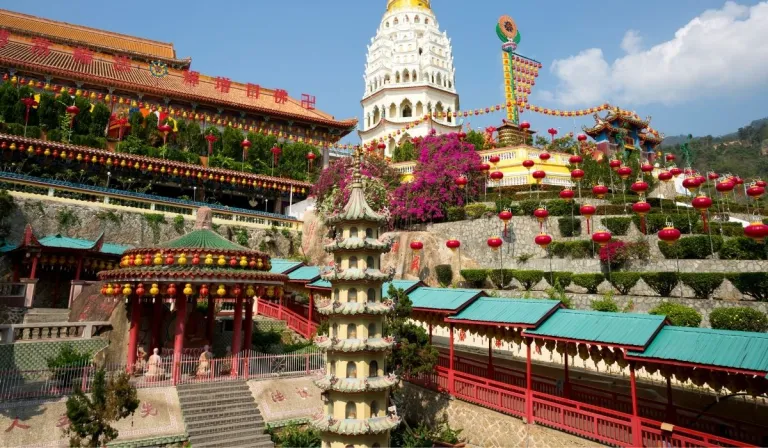
Image Credit: laughingmango
Located in the hills of Air Itam, Kek Lok Si is one of the largest and most impressive Chinese temple complexes in Southeast Asia. Rather than a single structure, it is a vast network of prayer halls, courtyards, pagodas and gardens that has been expanded over several decades. The scale of the complex reflects both religious devotion and the historical prosperity of Penang’s Chinese community.
A highlight of any visit is the Pagoda of Ten Thousand Buddhas, a striking structure that uniquely blends Chinese, Thai and Burmese architectural styles. Visitors can climb the pagoda for a small fee and admire the countless Buddha statues lining its interior. From there, an inclined lift takes visitors further uphill to the towering bronze statue of Guan Yin, the Goddess of Mercy, which stands over thirty metres tall.
Entry to the main temple grounds is free, and visitors are encouraged to take their time exploring the entire complex. Two hours is a reasonable minimum, particularly if you wish to pause, observe worshippers and take in the panoramic views of the island below.
3. The Colonial Peak: Penang Hill
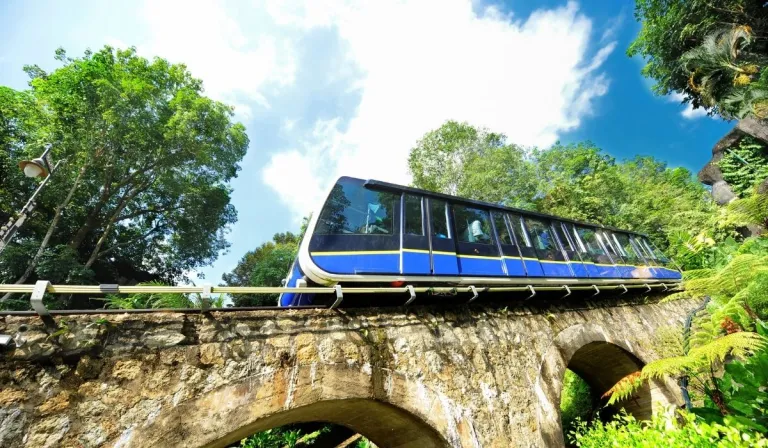
Image Credit: RAVINDRAN JOHN SMITH
Penang Hill, also known as Bukit Bendera, offers the most expansive views of the island. Rising 833 metres above sea level, it provides a welcome escape from the coastal heat, with cooler temperatures and refreshing breezes. During the colonial period, it served as the first hill station in Peninsular Malaysia, offering British administrators respite from the tropical climate.
The journey to the summit is an experience in itself. The funicular railway, one of the steepest tunnel tracks in the world, carries passengers up the hill in a journey lasting just a few minutes. At the top, visitors can stroll past colonial-era bungalows, visit a small Hindu temple and mosque, or explore The Habitat, an ecotourism attraction featuring nature trails and a treetop walk.
To avoid long queues, particularly on weekends and public holidays, it is advisable to book funicular tickets online in advance. Visiting early in the morning or close to sunset can also enhance the experience.
4. The Indigo Jewel: Cheong Fatt Tze’s Blue Mansion
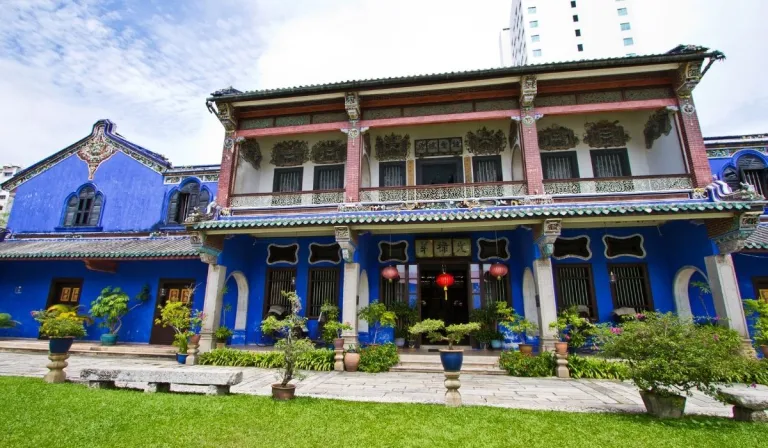
Image Credit: sinseeho
Cheong Fatt Tze’s Blue Mansion is one of Penang’s most photographed landmarks. Instantly recognisable by its indigo blue façade, the mansion gained international fame after appearing in the film Crazy Rich Asians. Built in the late nineteenth century by Cheong Fatt Tze, often described as the Rockefeller of the East, the mansion reflects a fusion of Eastern philosophy and Western materials.
The building incorporates Feng Shui principles alongside imported elements such as Scottish ironworks and English tiles. Today, it operates as a boutique hotel, which means access to the interior is limited. Visitors can enter by joining a guided tour held twice daily, dining at the mansion’s fine dining restaurant, or staying overnight.
The guided tour is particularly worthwhile, offering insight into Cheong Fatt Tze’s life, business empire and the meticulous restoration work that earned the building international conservation awards.
5. The Baba Nyonya Palace: Pinang Peranakan Mansion

Image Credit: AbdlahAwang
The Pinang Peranakan Mansion provides a window into the opulent world of the Peranakans, also known as the Straits-born Chinese. This restored mansion once belonged to a wealthy Baba and is filled with more than a thousand antiques, including ornate jewellery, porcelain, carved furniture and elaborate household items.
Unlike many museums, the mansion feels lived in, with rooms arranged to reflect daily life at the turn of the twentieth century. Free guided tours are included with the entrance ticket and are highly recommended. The guides explain Peranakan customs, marriage traditions and social hierarchies, bringing the space to life through storytelling.
Many visitors find the mansion even more richly decorated than the Blue Mansion, making it a complementary rather than competing experience.
6. The Over Water Village: Clan Jetties of George Town
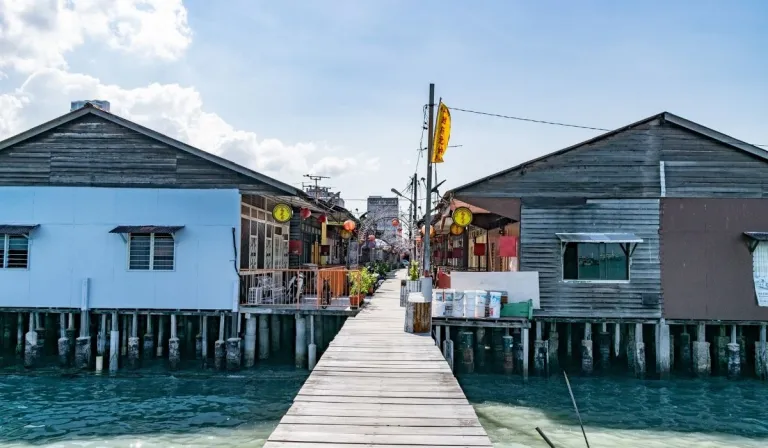
Image Credit: Juan José Napurí Guevara
The Clan Jetties represent one of the last remaining examples of traditional overwater villages in Malaysia. Built on stilts along the coastline, these wooden settlements were established by Chinese clans who named each jetty after their family name. Today, several of the jetties remain inhabited, offering a glimpse into a way of life that has largely disappeared elsewhere.
Chew Jetty is the most accessible and visitor-friendly, with small shops, food stalls and a temple at its far end. As you walk along the wooden planks, you will see residents carrying out everyday activities, from drying laundry to preparing meals.
It is important to remember that these are real homes. Visitors should move quietly, avoid intrusive photography and respect the privacy of the residents.
7. The Natural Escape: Penang National Park
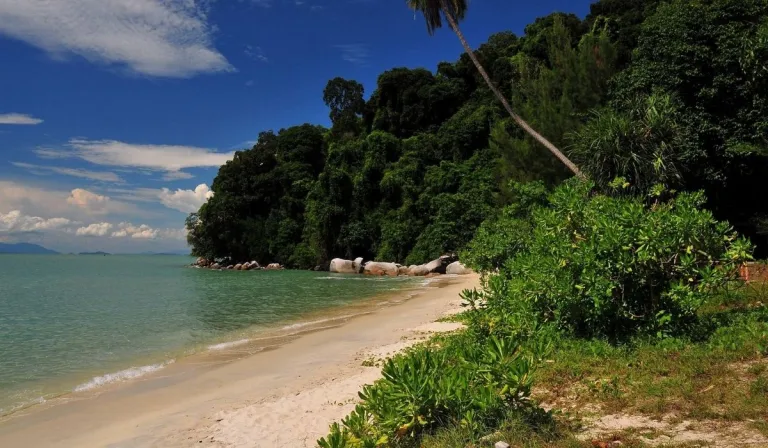
Image Credit: Richard_B190728
Penang National Park may be the smallest national park in the world, but it offers remarkable diversity. Dense jungle trails lead to secluded beaches, while the coastline supports unique ecological features. One of the most popular hikes leads to Turtle Beach, also known as Pantai Kerachut, where a turtle sanctuary operates during nesting season.
The beach is also home to a rare meromictic lake, where layers of saltwater and freshwater do not mix. After hiking, many visitors choose to return by boat, stopping at Monkey Beach along the way. Booking a boat for the return journey is highly recommended, particularly given the heat and humidity of the trail.
8. The Hawker Feast: Gurney Drive
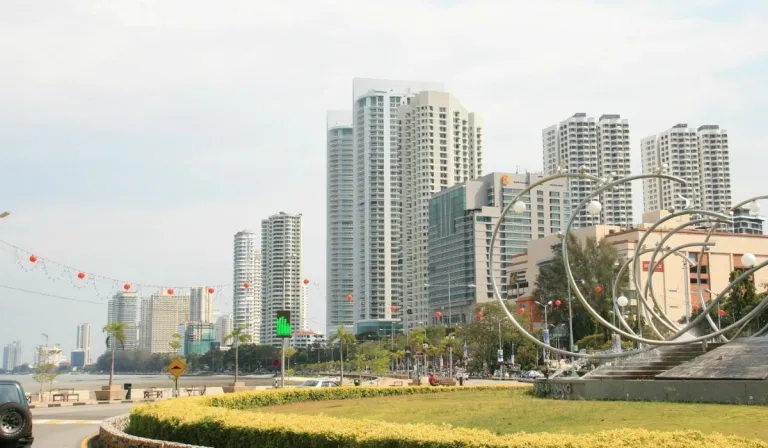
Image Credit: Galina V
No visit to Penang is complete without indulging in its street food, and Gurney Drive remains one of the island’s most iconic hawker destinations. Located along the seafront, it brings together many well-known stalls in one lively setting.
This is the ideal place to sample Penang’s signature dishes, including Assam Laksa, Char Kway Teow, Hokkien Mee and oyster omelette. The atmosphere is energetic and bustling, especially in the evening. Arriving early can help secure a table and make the experience more enjoyable.
Together, these eight places capture the essence of Penang. They reflect its layered history, cultural diversity and deep connection to food, nature and community. For first-time visitors, they offer an ideal starting point for understanding why Penang continues to captivate travellers from around the world.
Published on
About Author
RECOMMENDED READS
10 Best Instagram Spots in Macao Malaysians Must Check-Off 10个适合穷学生便宜又好吃的悉尼餐厅 住宿费高,交通费高,伙食费也高。生活在悉尼的学生们,即使一个星期打工20个小时,也最多只能补贴一半的生活费。想吃一顿好吃的却又担心钱包越来越薄,只好每天往Maccas(麦当劳)跑。是不是说中了你的心声呢?别担心,今天就让小编为你提供10个经济实惠的餐厅,从今以后让你和Maccas说拜拜!
探索 斯洛文尼亚 :感受世界上唯一以爱命名的国家 无论你是喜欢感受当地文化,还是探索大自然的奥妙,处处风景如画的斯洛文尼亚都能满足你的愿望。在斯洛文尼亚,无论何时何地都能让你拥有精彩丰富的旅游体验,只要用心感受,你一定能这趟旅行中探索属于你的斯洛文尼亚特色。
Switzerland at a Glance: The Complete Travel Guide for Malaysians Longing to visit Switzerland but not sure how to go about planning the trip? Take a peek inside this complete travel guide for Malaysians now and make your dreams come true!
A Fusion of East and West at Art Macao International Arts and Cultural Event Ready to experience the artsy side of Macao? Then you’ll definitely want to check out Art Macao, a celebration of the city’s vibrant art scene!
RECENT ARTICLES
8个理由告诉你:秋冬季节到瑞士旅行,为什么值得玩得更久? 从巧克力、芝士到滑雪山坡,让你的瑞士旅行体验更上一层楼。
Mandarin Oriental Desaru Coast: Inside Johor’s Luxury Rainforest Resort Welcoming Johor's latest luxury retreat: Mandarin Oriental, Desaru Coast.
Super Nintendo World Singapore Is Coming: What Malaysian Need to Know Good news, Mario fans ~
布城半日游怎么玩?从粉红清真寺到水上Taxi 7个打卡景点,这份游路线值得收藏! 从梦幻的粉红穹顶、充满异域美感的摩洛哥风情!
What Makes China eSIM Ideal for Uninterrupted Internet Connectivity Here's why travelling in China is better with an eSIM